Designing a system that meets Australian Standards (AS1768:2021) requires a deep understanding of local conditions, risk assessment methodologies, and the integration of both external and internal protection measures.
The Foundation: Risk Assessment
The first step in any design is a comprehensive risk assessment. AS1768 provides a framework to determine the "lightning risk" based on several factors:
The frequency of lightning strikes per square kilometre in the specific region.
The height, footprint, and construction material of the building or facility.
Whether the site houses explosive materials, sensitive electronics, or high numbers of people.
The economic and social impact if the facility loses power or data services.
External Protection: Interception & Pathing
An external LPS aims to intercept direct strikes and conduct the current safely to the ground. Key components include:
- Air Terminals (Rods): Placed at high points to "catch" the lightning.
- Down Conductors: Low-impedance paths that guide current down the structure.
- Earthing System: Disperses the massive electrical energy into the earth without causing damage.
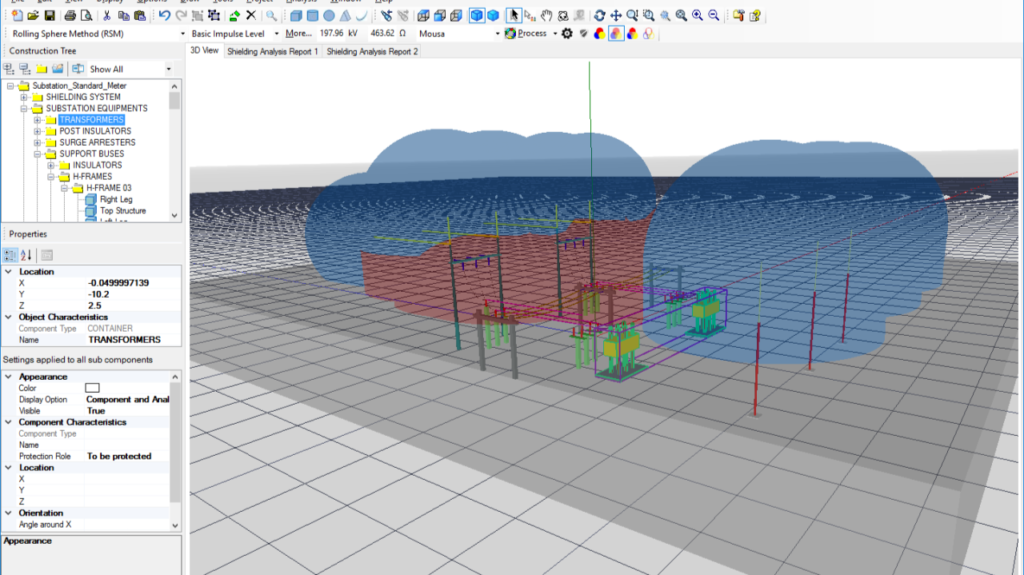
We use advanced 3D modelling and the 'Rolling Sphere' method to identify "blind spots" on complex structures, ensuring every corner is protected from potential side-flashes.
Internal Protection: Surge Suppression
Lightning doesn't have to strike a building directly to cause damage. Nearby strikes create electromagnetic pulses that can travel through power lines and data cables.
Internal protection focuses on Surge Protection Devices (SPDs). These devices "clamp" voltage spikes, protecting sensitive server racks, PLC systems, and building automation hardware from burnout.
Compliance with AS1768:2021
| Requirement | Description |
|---|---|
| Proper Zoning | Defining Lightning Protection Zones (LPZ) to apply staged protection. |
| Bonding | Ensuring all metal services (gas, water, structural steel) are bonded to prevent sparking. |
| Maintenance | Mandatory periodic inspections to verify earth resistance and conductor integrity. |
Why Professional Design Matters
A "one size fits all" approach often leads to either over-engineering (wasted cost) or under-protection (catastrophic risk). GridServe’s engineering team combines local knowledge with international expertise to deliver bespoke designs that are:
- Fully compliant with Australian Standards and insurance requirements
- Optimised for the specific Ground Flash Density of your site
- Integrated with existing earthing and electrical infrastructure
- National coverage and fast turnaround on commercial and industrial projects
- Expert use of state-of-the-art CDEGS software
Book a Free Lightning Risk Assessment
Understand your exposure, achieve full compliance, and plan a reliable protection system — at no obligation.
Contact GridServe
Don't wait for a strike to act. Let GridServe protect your investment with a professional, standards-compliant lightning protection system.
Written by
Anil Chaudhary
<div class="elementor-element elementor-element-0c15f3f elementor-widget elementor-widget-text-editor" data-id="0c15f3f" data-element_type="widget" data-e-type="widget" data-widget_type="text-editor.default"> <p class="team-bio">Anil Chaudhary is an experienced electrical engineer and energy infrastructure professional with extensive expertise in power systems, renewable energy, and battery energy storage systems. He combines strong technical capability with strategic leadership, having worked with major Australian utilities and infrastructure organisations across the design, engineering, and delivery of critical energy and telecommunications projects.</p><p class="team-bio">Anil has held senior leadership roles including General Manager at RSS CommTel, leading major infrastructure programs and operational teams. At GridServe, he leads engineering strategy, project delivery, and client partnerships.</p><div class="team-section-label">Key expertise</div><ul class="expertise-list"><li>Battery Energy Storage Systems (BESS)</li><li>Solar PV integration</li><li>Power system studies</li><li>Earthing system design</li><li>Lightning protection design</li><li>Grid compliance assessments</li><li>Engineering strategy & project delivery</li></ul> </div><h3 class="elementor-heading-title elementor-size-default">Past organisations </h3><div class="bio-bottom-list elementor-element elementor-element-d87ceed elementor-icon-list--layout-inline elementor-list-item-link-full_width elementor-widget elementor-widget-icon-list" data-id="d87ceed" data-element_type="widget" data-e-type="widget" data-widget_type="icon-list.default"> <ul class="elementor-icon-list-items elementor-inline-items"> <li class="elementor-icon-list-item elementor-inline-item"> <span class="elementor-icon-list-text">Power & Water Corporation</span> </li> <li class="elementor-icon-list-item elementor-inline-item"> <span class="elementor-icon-list-text">AusNet Services</span> </li> <li class="elementor-icon-list-item elementor-inline-item"> <span class="elementor-icon-list-text">Ausgrid</span> </li> <li class="elementor-icon-list-item elementor-inline-item"> <span class="elementor-icon-list-text">Telstra</span> </li> <li class="elementor-icon-list-item elementor-inline-item"> <span class="elementor-icon-list-text">RSS CommTel</span> </li> </ul> </div>
View all articles by Anil Chaudhary →